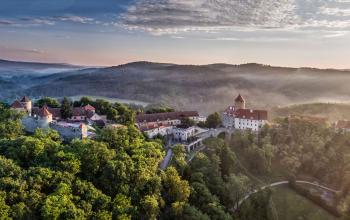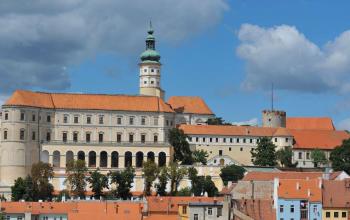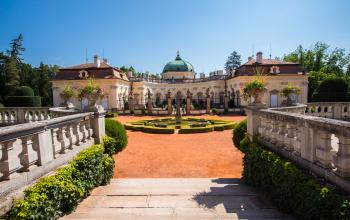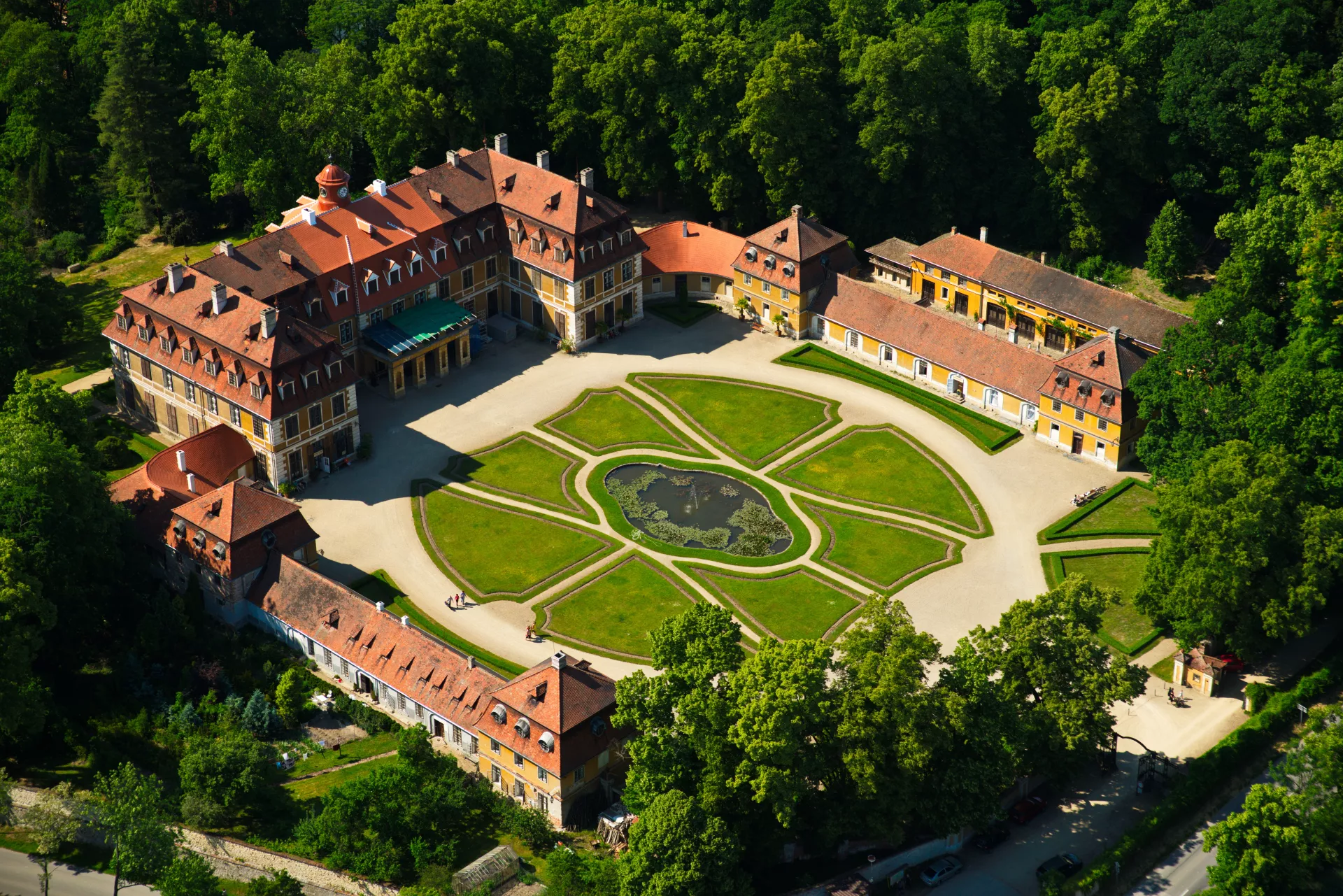
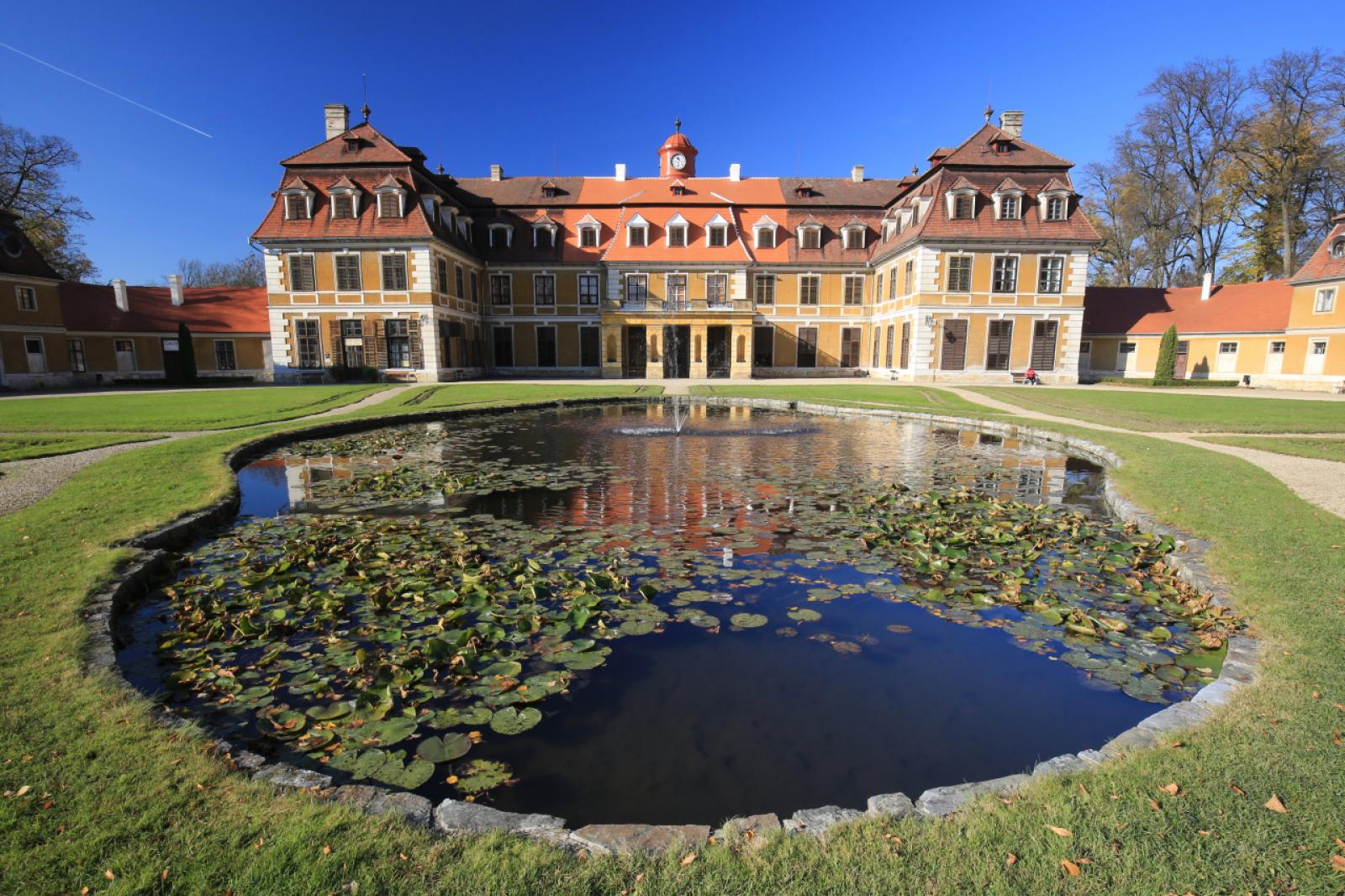
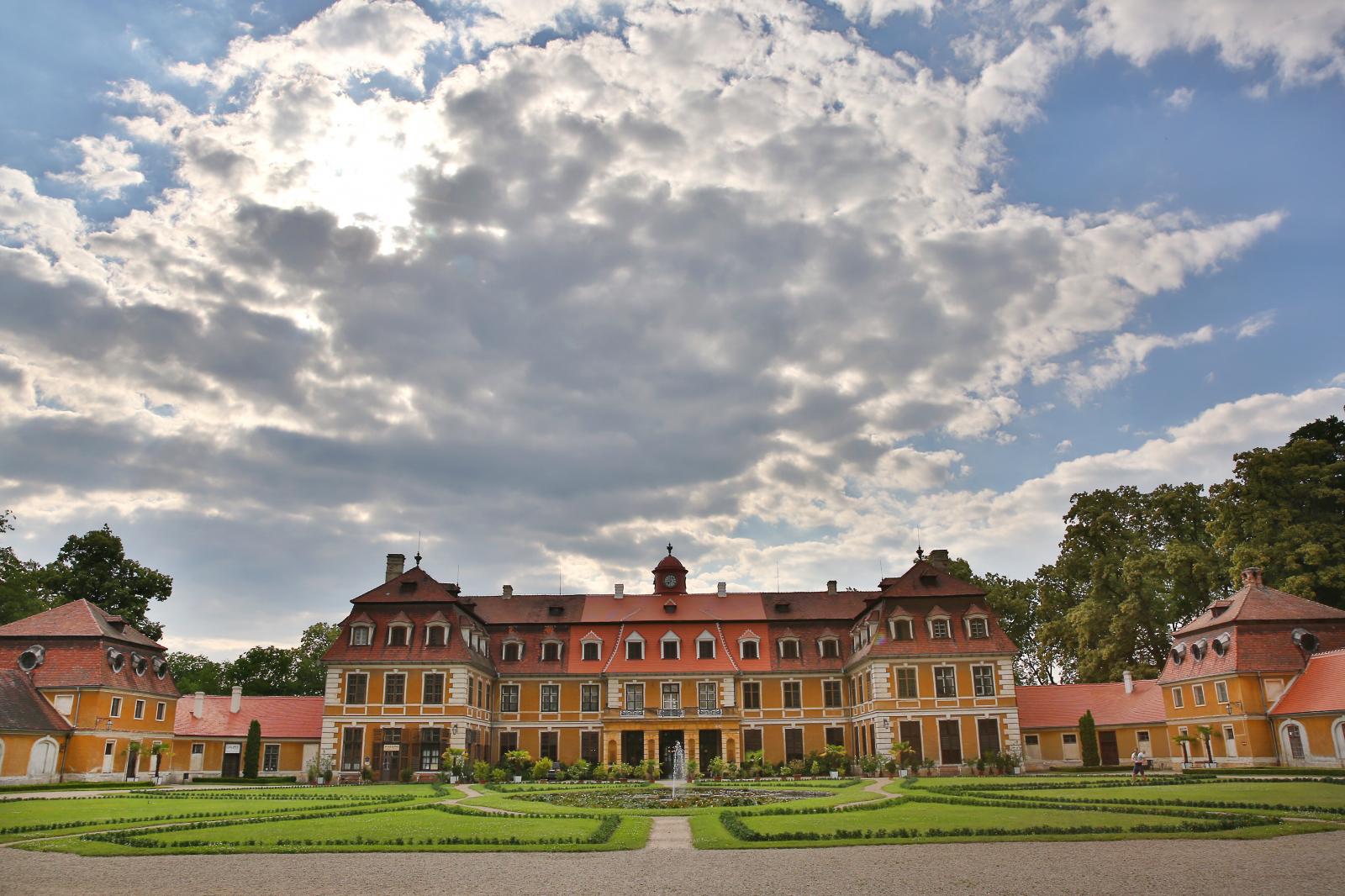
Rococo and Classicism in full parade and a collection of camellias on top of that, this is the Rájec nad Svitavou chateau.
Dating back to the 18th century, this chateau built in the Rococo and Classicist style will intrigue you with its architecture, so different from the roundness and pomposity of the Baroque. This chateau is unique in Moravia. Inside, your initial impression will be strengthened by the luxuriously furnished interiors of the Salm princely family. The collections are rich and the extensive collection of oriental porcelain is the most outstanding among them.
Then there is the famous local chateau library. The renowned writer Umberto Eco, the author of The Name of the Rose, had thirty thousand books in his private library. But that is nothing compared to this chateau’s library, which has sixty thousand books! The oldest manuscripts date back to the 14th century (Eco the bookworm definitely did not have anything like that).
A vast English park does credit to the tradition of chateau gardening. Every year, thematic exhibitions of flowers are held in the historic halls of the chateau. You may have heard of the camellias from Rájec. You can find a chateau garden centre behind the park, featuring a unique collection of these noble flowers. These days high society plays golf, but in the 19th century the aristocracy and representatives of other wealthy classes enjoyed collecting camellias. They built special greenhouses for them, like the aristocracy in Rájec. If gardening is your thing, come here ideally in late February or early March.
And even if you are unable to distinguish a camellia from a tulip, just go on a night tour of the chateau. You can choose from four routes. You can replenish your energy levels in the U Kata restaurant on the freely accessible chateau premises. You may also buy a new piece for your private collection in the Kruh Gallery, which hosts exhibitions and sales of renowned artists’ works.
The chateau park is open from 6 a.m. to 8 p.m and entrance is free of charge.
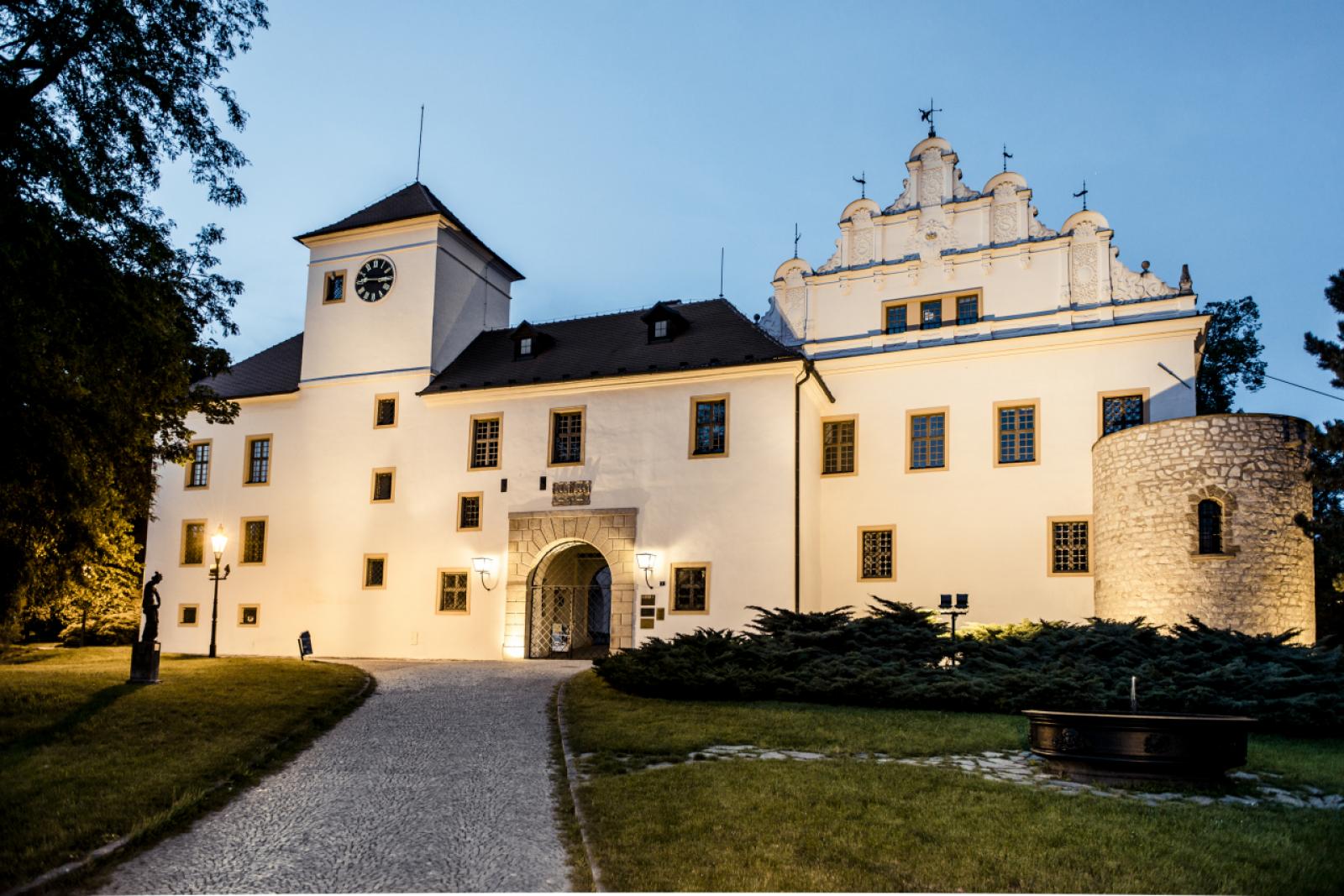
We have an extra tip for you: you can find similar magnificent interiors and also the Museum of the Blansko Region (Muzeum Blanenska) in the nearby Blansko Chateau. They focus on the Moravian Karst there, artistic cast iron and adventures back into prehistory – it is definitely a must-see place!
We have found other places you might like. Have a look at them.
found 12 places
This site, one of the oldest castles in Moravia and today a chateau, will be appreciated by fans of ornate historic interiors.
One of the most romantic places in South Moravia. No need to read a chivalric romance when you can live romance at the Cornštejn Castle.
One of the oldest and most romantic castles in the Czech Republic. Instead of going up a steep hill, you will go down a steep hill to get to it. Can you believe it?
A large reservoir and a huge castle. Explore one of the largest Moravian castle areas within sight of Brno.
Even from a great distance this majestic castle will tempt all to come and visit it. No wonder Napoleon himself spent the night here.
Small, attractive, set among beautiful nature. Enjoy contact with animals to the max – the zoo in Hodonín is cosy and direct.
People who love castles and chateaux will be thrilled by this site that offers a castle and a chateau in one place! And not just any place.
How about a picnic in one of the most beautiful chateau gardens in the Czech Republic?
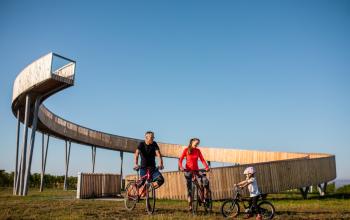
Take a look around the vineyards from an unusual lookout tower without a single stair. You can get to the top of it even with a pram!
Legend has it that around the year 912 a water fortress grew on a small rock in the middle of the marshes under the supervision of Princess Miroslava. Today it has the form of a castle and the name Miroslav.
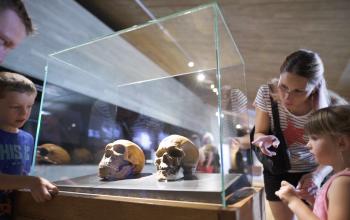
Do you find events of long ago boring? A visit to Pavlov will turn you into a real fan of prehistory! Your kids will remember this spectacular exhibition for a long time to come.
Vranov Chateau is an exemplary secular Baroque site. That is why it is has served as a backdrop for many films and fairy-tales.

.JPG/1600)
.JPG/1600)
.JPG/1600)
.jpg/350x220)