Did Napoleon pause in Brno? Yes, he did! In fact, he spent more time in the Moravian capital in the memorable year of 1805 than on the battlefield at Austerlitz (Slavkov). Therefore, take a stroll through Brno and look at the familiar city with fresh eyes.
4.1 km
1:30 hours
32 m
We offer you something like a "Brno Napoleon Tour." It won't be a long journey; you'll stay in the city center the whole time…
On 19 November, 1805, French troops entered Brno and began fortification works, with Napoleon himself arriving one day later. From here, he regularly set out to study the landscape of the future battle where he intended to lure the allied forces. He always returned to Brno after dark (issuing an order for two lit candles in every window to greet him).
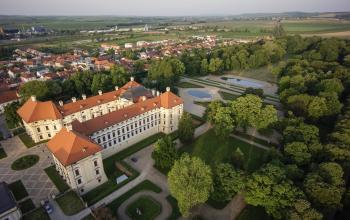
Napoleon and his staff stayed at the Governor's Palace (Místodržitelský palác), a former Augustinian monastery (now the Moravian Gallery). From 21 November, 1805, until the departure of the troops to the battlefield, daily military parades took place here. (Napoleon returned to the Governor's Palace with his staff once more after the victorious Battle of Znaim in 1809.)
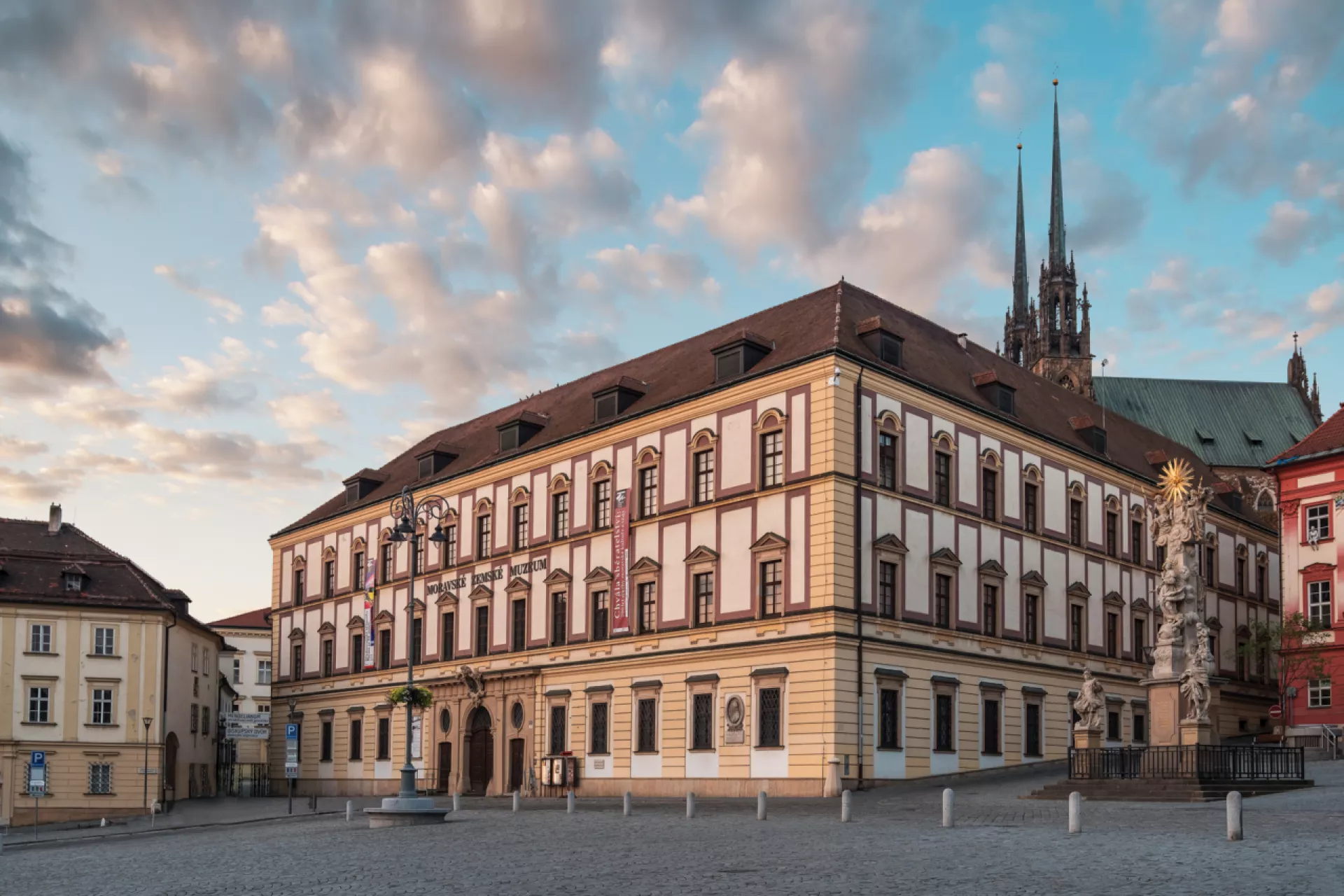
In the Dietrichstein Palace on "Zelný trh", Russian Marshal Kutuzov stayed (2-5 October). He was the supreme commander of the allied armies in the Battle of Austerlitz (see the memorial plaque on the Moravian Museum building). After the arrival of the French, Marshal Lannes moved into the palace, and slaughterhouses were set up on Zelný trh (Cabbage Market) in front of the palace during the French army's stay. Every day, meat was prepared for the entire army (approximately 23 cows per day from the property of the poor local farmers), and the square had an incredible stench. Nearby, at the Reduta Theater, the French established a prison for Russian officers after the Battle of Austerlitz, and later, a military hospital. Can you imagine how this affected the interiors of the beautiful building? Due to this, theatrical performances ceased for many years.
Just a few minutes' walk away, you'll find the park beneath Brno's Petrov Hill, known today as Denis Gardens (Denisovy sady). As a commemoration of the end of the war's hardships, an obelisk was ceremoniously erected here in 1818. It takes the form of a four-sided pyramid, with a quartet of gilded lions guarding each corner. Brno residents certainly had plenty of reasons to celebrate the end of Napoleon's stay in South Moravia. Firstly, after the French occupation of Brno, the military authorities claimed magnificent noble palaces for themselves and soldiers occupied bourgeois houses and monasteries. Moreover, many inhabitants of ground-floor apartments had to give up their homes to the horses! Besides, the unfortunate townsfolk also had the "honour" (= duty) of providing for their sustenance. In addition to this, Brno had to supply the French with shoes, the aforementioned tons of meat, tens of thousands of loaves of bread, and so on. On the top of all the locals' suffering, the thousands of wounded and captured soldiers after the battle were a source of a deadly typhus epidemic.
The aim of our journey following Napoleon footsteps in Brno is the monument to the French general Valhubert in Tyrš's Park in the Veveří district (formerly the city cemetery, which is now evidenced only by the central cemetery cross from 1847). He was mortally wounded during the Battle of Austerlitz and died in Brno three days later. Napoleon himself attended his funeral at the Church of St. James, where we will also conclude our tour of Brno.
We have found other places you might like. Have a look at them.
found 12 trips
Discover the treasures of Moravian literature in Rajhrad, climb through vineyards and apricot orchards to the Výhon Lookout Tower. Let the generous arms of South Moravia embrace you.
From scenic boat trips to cultural tours, this itinerary offers a perfect blend of history, gastronomy, and natural wonders.
This circular bike trip starts in the center of Slavkov, synonymous with the famous Battle of the Three Emperors in 1805. You'll cover a total of 31 kilometers and ascent 376 meters. Get ready to pedal!
Hot summer in South Moravia? Cool down in the Brno underground. South Moravia is the sunniest region of the Czech Republic, which is why the grapes thrive there, but the sweltering temperatures can make you drowsy... The heat cannot reach under the ground, though!
A leisurely bike trip through the mementos of the Battle of the Three Emperors. You'll cover a distance of 32 km with a total ascent of 366 m.
The Brno–Mikulov route begins in the very heart of Brno at the Church of St. James, the central hub of the Ways of St. James in South Moravia. Mass is celebrated here daily, and guided tours are available during the season. Beneath the church, you can visit Europe’s second-largest ossuary (tours are in high demand, so booking in advance is recommended). Collect your first stamp from the pilgrim box at the church entrance - or purchase your credencial at the parish office across the street.
Coal near Brno? Black and genuine? It was mined here in ten mines starting from the mid-18th century. The deepest galleries in Central Europe!
On foot or by bike. Go and see the places where a crucial event of Czech history took place in 1805. And not just of Czech history, but also of French, Russian and Austrian history. The Battle of the Three Emperors was fought right here.
Get on your bike and let the breeze carry you through the fragrant summer. Time passes more slowly here, the sun shines on the vineyards and the romantic valley of the Jihlava River tempts you to relax.
From Brno's historic charm to Alfons Mucha's art in Moravský Krumlov, scenic Lednice, and wine-soaked Znojmo, each day unveils a blend of culture and gastronomy for an unforgettable journey.
The Olomouc–Brno route is pleasantly varied, with plenty of pilgrim stamps to collect along the way. The 95-kilometre route is divided into stages — it’s up to you whether you walk it all.
Jewish history and culture resonate deeply within the very fabric of Brno, their legacy woven into the cityscape through a tapestry of landmarks, from the city's sole functioning synagogue to the poignant Stolpersteine memorials. Embark on a journey through time, guided by the enduring spirit of Jewish heritage, as you uncover the stories, fates, and indelible mark left on this vibrant metropolis.


.jpg/350x220)
.JPG/350x220)